Showing posts with label prostatitis. Show all posts

A Healthy Prostate and You

Once upon a time, people had no idea how to diagnose and treat prostate disease and this lead to scores of men throughout history needlessly suffering and even dying from not taking the proper preventative steps. Thanks to modern medicine, prostate disease is now well documented and not longer necessarily considered a death sentence to those who suffer from it. Knowledge and preventative maintenance have become the most effective methods for handling the disease. In this article we hope to help shed some light on prostate disease, the various diagnostic tools that are at your disposal as well as recommend some treatment options. 

The Prostate Defined

The first step to understanding how your prostate affects your health is to learn exactly what the prostate is and what purpose it serves. While the prostate is a rather small walnut sized gland that sits just below the bladder, in front of the rectum and behind the pubic bone, it does play a very important part in the male reproductive system. This small donut shaped gland surrounds your urethra (the channel that transports your urine from your bladder to your penis) and helps control the flow of urine. The prostate is also contacted to your testicles via tubes. Before ejaculation, sperm is first carried up to the prostate where it mixes with a prostatic fluids and proteins produced by the seminal vesicles which are attached to the prostate. The resulting fluid is then ejaculated during orgasm through ejaculatory ducts that are connected to the urethra. 

Prostate Problems

Almost every man is bound to experience some type of prostate problem during their lifetime, especially as they get older. A common problem for men over the age of 45 is an enlarged prostrate called BPH (Benign prostate Hypertrophy). While not life threatening by any means, this growing of the prostate can be a major nuisance and could possibly be a forerunner to more serious problems in the future. 

The most common symptoms of BPH are:

• Difficulty urinating
• Feeling like you need to urinate all the time even if you just went
• Increased urination at night
• A weak urine stream 

If you have any or all of these symptoms, seeking the counsel of an urologist is highly recommended. Since the conditions are not life threatening, many men choose to simply put up with the discomfort, while others will seek treatment and surgery if the enlargement is rather significant. 

Prostate Cancer

While BPH is not life threatening, Prostate Cancer most definitely is, especially if it is not diagnosed and treated in its early stages. African American males as well as men with a history of prostate cancer in their family are at the most risk, almost twice as likely to develop prostate cancer before the age of 50. Diagnostic screening is the only way to truly determine whether you are at risk and the earlier you are screened the higher the odds of your survival.

Surgery Alternative to Prostate Cancer

Hormonal Therapy

While many urologists dismiss hormonal therapy for prostate cancer until further research can be done, as of late it has become almost as popular as surgery. Prostate Cancer is believed to feed upon testosterone that is in the bloodstream, thereby spreading out from the prostate to other parts of the body. Drugs such as DES (diethisibestrol) which have a chemical composition similar to estrogen can help to cancel out the male hormones in the body. 

While DES and other hormonal therapies like it can bring about relief from the symptoms and even a longer life, there are a number of drawbacks. Swapping male hormones for female ones can destroy a man’s drive, leaving him totally impotent. Other side effects include enlarged breasts, thinning facial hair and even scrotal shrinkage. 

Another form of hormonal therapy that can be used during the later stages of prostate cancer are the LH-RH Agonists known as Leuprolide anf Goserline. This is a synthetic pituitary hormone that has been designed to help regulate the release of testosterone into the bloodstream. It is administered through injections or pellet implants and it works by first triggering an initial rush of testosterone before cutting off the supply thereby starving the tumor. Side effects from this type of hormonal therapy include hot flashes, headaches and potential impotence. 

Antiandrogens can also help inhibit the action of testosterone upon cancer cells. Marketed under the brand name flutamide, antiandrogens are commonly used in conjunction with other hormonal treatments to help ease the pain that comes with the advanced stages of prostate cancer. Enzyme inhibiting drugs such as Proscar that help block the production of the enzyme that triggers testosterone production are also an available option.
Immunotherapy

Immunotherapy can be seen as a way to train your body’s natural defense mechanisms to combat diseases such as prostate cancer. This is usually done in conjunction with chemotherapy to help men get through the later stages of prostate cancer. Herbs and other natural cures are sometimes used as well to help the body fight off the cancer. 

Radiation Therapy and Heat 

Cancer cells are still just cells, and will die off and fail to divide if they are exposed to temperatures that are greater than 105 Degrees Fahrenheit. Scientists have found that applying heat to the whole body or even just a localized spot and then using radiation seems to have more impact than either method alone, 

Chemotherapy

Chemotherapy uses chemicals to attack and kill the cancer cells in a patient. However, since it also ends up taking out many healthy cells as well, it is generally considered as a last resort. 

These are but a few of the many different treatment options that are now available for prostate cnacer patients. It is important to have a discussion with your doctor in order to determine which treatment option is the best one for you.

Impotence After Prostate Cancer Treatment

Impotence after prostate cancer treatment is about the most common outcome of most of the known conventional processes that intervene for prostate cancer patients. Even the less invasive ones like nonsurgical hormonal therapy for the condition tend to result in loss of sex drive over the long run, something that a lot of patients are not eager to live with. In some way or the other, the sexual life of a patient with prostate cancer is irrevocably impacted from the day he gets the diagnosis.

But one does not have to give in to the impotence. For starters, if it has resulted from a standard radical prostatectomy, sex drive and penile sensation are uncompromised by the procedure, so that it is still possible to achieve some pleasure. In addition, several patients claim that they have their ability to achieve an erection (or some of it) back after only a few weeks from the surgery. Although most men may never again be able to attain an erection without assistance, this may still be a silver lining to a very dark cloud.


And speaking of assistance, Viagra pills have been known to restore some semblance of potency for a man trying to achieve an erection. A single pill minutes before the sex act might even do the trick. If it appears as though it is not working as expected, the man ought to see a doctor in a hurry and get the proper directions. Cialis and Levitra are two other medications that may work quite as well.

Other measures also avail that help in some way or the other to manage an erection for sex when potency have been compromised by prostate cancer treatment. The use of VED pumps is not a surreptitious occurrence in the United States, and it is certainly an acceptable way to bring blood into the penis from all over the body. Before the actual act of intercourse, the patient might want to tie a knot around the base of the penis to keep the blood from flowing out.

There are certain drugs too that if injected in the appropriate doses into the side of the penis may precipitate an erection strong enough to have intercourse with. Sex may not even be hard next time because all he has to do will be to inject the drug into the penis. Some men even combine these erection-achieving techniques in some way so as be able to 'keep it up' for longer; however most men just long to be able to have sex without any assistance at all.

Again, just for the record, life may never be the same after a prostate cancer diagnosis; the way out is to anticipate it and prepare the best you can.

Click here -- [http://prostatecancervictory.com/prostate-cancer-treatment/prostate-cancer-hormone-therapy/side-effects-of-prostate-cancer-androgen-hormone-therapy/]Prostate Cancer Androgen Hormone Therapy and --] [http://prostatecancervictory.com/prostate-cancer-treatment/prostate-cancer-hormone-therapy/hormone-therapy-for-prostrate-cancer-how-effective-is-it/]Hormone Therapy for Prostrate Cancer for top secrets of surviving this deadly cancer!

To order the safest and best erectile dysfunction pill, Click Here.
Just check out these customer testimonials

Garlic and prostate cancer

A team of research scientists at New York’s Cornell University have determined that garlic may effectively kill off human prostate cancer cells.

Prostate cancer is a deadly disease that affects many older men. The prostate is a small organ (about the size of a walnut) that is wrapped around the uretha where it plays an important role in the reproductive system.

Prostate cancer strikes many older men prompting doctors to check for it early and often if their patients report any early symptoms such as trouble urinating or pain while urinating. Prostate cancer can be deadly and treatment usually involve intense radiation and chemotherapy and may even involve surgery.


The best way to battle this disease is to take preventative step in getting it in the first place. The earlier you detect it the better the chances are of finding a affective treatment for it. Getting regular checkups and eating a prostate healthy diet are key steps in stopping the prostate cancer death.

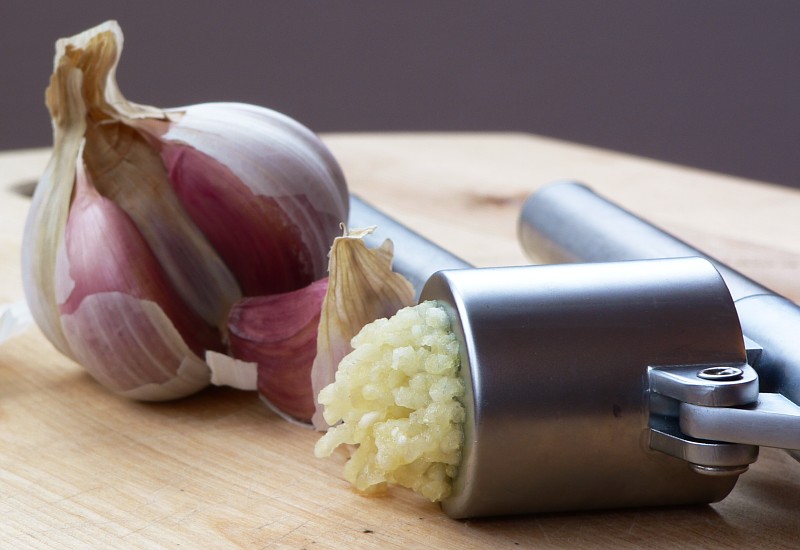
One thing that scientists found to include in your prostate friendly diet is garlic. Certain studies have indicated that this powerful l herb is not only fit to fight bacteria, fungi and viruses, but also capable of killing off cancer cells.

In one study conducted at the Memorial Sloan Cancer Center, human prostate cancer cells were cultured over a 24 hour period then exposed some of the petri dishes to a saline solution that contained 50 ppm of one of the two  garlic components: S-Allycysteine or S-allymercaptocysteine. Both of these sulfur based components are found in aged garlic. The second component displayed the ability to cut the number of cancer cells down by half within 6 to 8 days. This powerful garlic component even displayed an inhibitory effect on the cancer cells for several more days even after it was rinsed away. The other aged garlic component: S-Allycysteine also showed potential prostate cancer cell killing power, but was nowhere near as effective as A-Allymercaptocyseine.

Researchers believe that the compounds ability to generate the antioxidant gluthione is an important factor  in the findings. Glutathione is believed to  take away certain protiend that the prostate cancer cells need in order to proliferate. It should be noted that while only aged garlic components were studied (the research was partially funded by a Aged Garlic Supplement company) the powerful antioxidant Glutathione can also be made from selenium which is found in abundance in all forms of garlic. 

The health benefits of actual sarsaparilla root

Anybody who is a fan of old westerns knows the stereotype of the old timer in the salon asking for a sarsaparilla. Aside from whiskey and beer, this old fashioned cousin of root beer was a favorite drink in the old west. Made from a combination of sassafras and sarsaparilla, it was especially tasty and refreshing drink in the hot dry day and was thought to help purify the body by inducing sweating. This saloon drink went on to become a popular soft drink flavor, and can still be found in specialty stores today, although most are now made with artificial ingredients.   


Before is became synonymous with the old west, sarsaparilla’s detoxifying benefits were utilized for a number of ailments including liver disease and syphilis. Native to the Western Hemisphere and favoring the hot and dry climates of Latin and South America, Sarsaparilla was first introduced to Europe during the late fifteenth century.  From the 16th Century up until the middle Eighteen Hundreds, Europeans and their American Descendents put the thorny wooden vine to use as a blood purifier, tonic diuretic and sweat inducer.

During the latter half of the Nineteenth Century until the early Twentieth, Sarsaparilla was widely used as an additive to many patent medicines, including many who which were the Victorian Age equivalents to body building supplements and Viagra. This was due to the notion that the root actually contained testosterone. This one time belief that the herb actually contained the hormone that helped controlled a man’s sex drive may help explain why it was also so popular with the old timers in the saloons (many of which doubled as brothels).

While modern research has disproved the idea of actual male hormones in the plant, they did find steroidal saponins which are believed to mimic hormones, indicating that the cowboys and snake oil peddlers might have been on to something after all.

Today, sarsaparilla is prescribed by homeopathic practitioners as a treatment inflammation and to help cleanse the liver. With slight anti-inflammatory and antibacterial properties, it can also be used as a treatment for skin conditions such as psoriasis and eczema.  Dried sarsaparilla root can be found in many health food stores and if you look hard enough, you just might be able to find old timey sarsaparilla soda also.